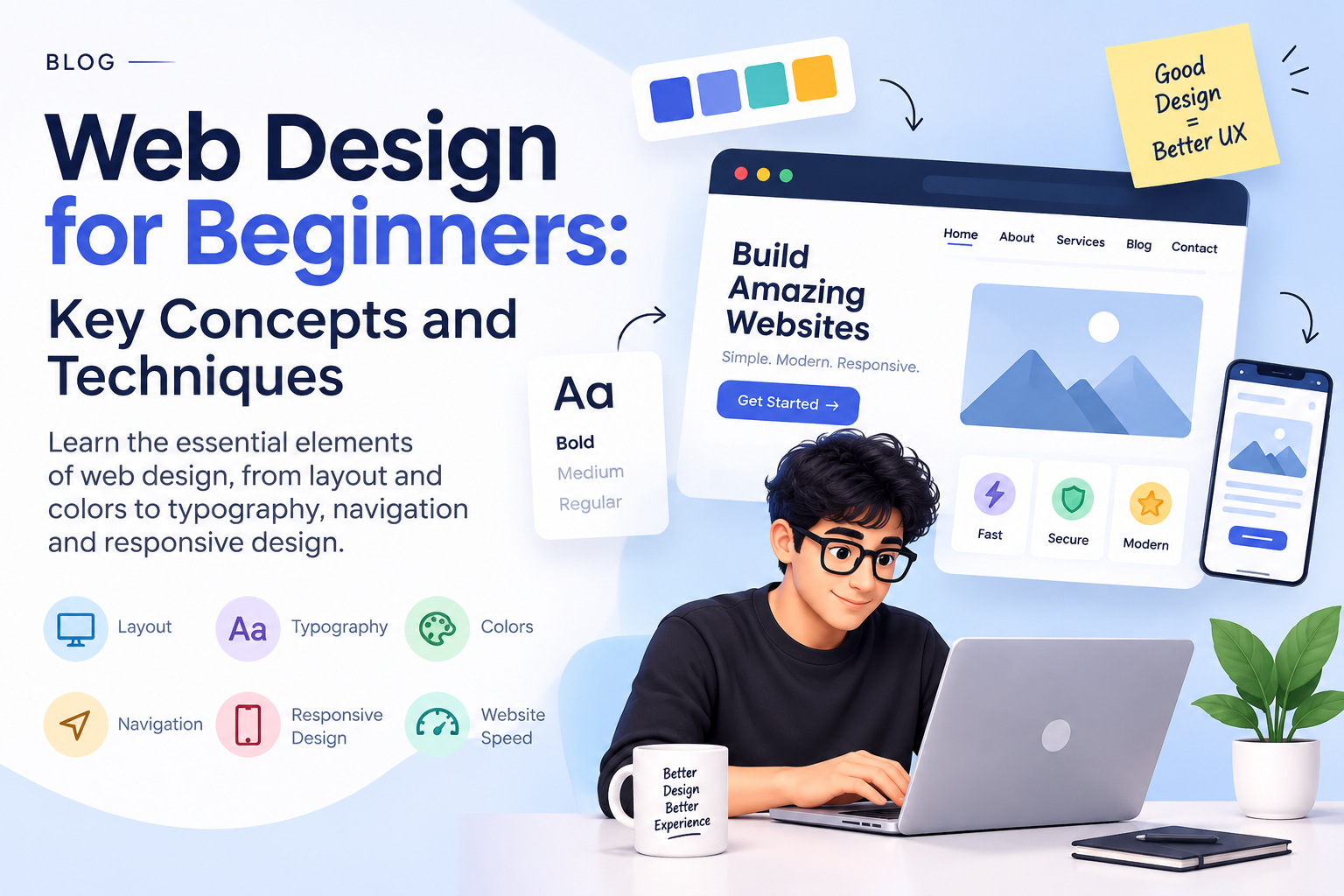
Web Design: Essential Concepts & Techniques for Beginners
- By Admin
- |
- 0 Comments
Web Design for Beginners: Key Concepts and Techniques
A well-designed website is more than just attractive visuals. Good web design combines layout, colors, typography, images, navigation, and user experience to create a website that is easy and enjoyable to use.
Whether you are a beginner or planning to build a website for your business, understanding the basic principles of web design is important.
What Is Web Design?
Web design is the process of planning and creating the visual appearance and user experience of a website.
It includes elements such as:
-
Website layout
-
Colors
-
Typography
-
Images and graphics
-
Navigation
-
Buttons and forms
-
Mobile responsiveness
-
User experience
The main goal of web design is to make a website visually appealing, easy to navigate, and useful for visitors.
Why Is Web Design Important?
A website is often the first interaction customers have with a business. A professional website can help create trust and encourage visitors to explore your products or services.
Good web design can help with:
-
Better user experience
-
Stronger brand identity
-
Easy navigation
-
Higher engagement
-
Better mobile experience
-
Improved conversions
Key Elements of Web Design
1. Website Layout
Layout determines how different elements are arranged on a webpage.
A good layout should make important information easy to find. Headings, images, text, buttons, and other elements should have enough spacing and a logical structure.
2. Typography
Typography refers to the fonts used on a website.
Choose fonts that are:
-
Easy to read
-
Consistent with the brand
-
Properly sized
-
Suitable for both desktop and mobile devices
Using too many different fonts can make a website look confusing.
3. Color Scheme
Colors influence how visitors perceive a website. A good color palette should match the brand and provide sufficient contrast.
For example, blue is often associated with trust and professionalism, while green can represent nature, health, or growth.
4. Navigation
Website navigation helps visitors find the information they need.
A navigation menu should be simple and clearly organized. Common menu items include:
Home | About Us | Services | Blog | Contact Us
Good navigation reduces confusion and helps users move through the website easily.
5. Responsive Design
Today, people access websites from smartphones, tablets, laptops, and desktop computers.
Responsive web design allows a website to automatically adjust its layout and content according to the user's screen size.
A mobile-friendly website should have:
-
Easy-to-read text
-
Properly sized buttons
-
Fast loading pages
-
Easy navigation
-
Properly scaled images
6. Call-to-Action Buttons
CTA buttons encourage visitors to take a specific action.
Examples include:
-
Get Started
-
Buy Now
-
Contact Us
-
Book a Demo
-
Learn More
A CTA should be clearly visible and should tell users what will happen when they click it.
7. Website Speed
Website speed is an important part of user experience. If a page takes too long to load, visitors may leave before viewing the content.
To improve website performance:
-
Compress images
-
Reduce unnecessary scripts
-
Use optimized code
-
Enable browser caching
-
Use a reliable hosting service
8. User Experience (UX)
UX focuses on how users interact with a website.
A good UX means visitors can easily:
Find information → Understand the content → Take action
Designers should remove unnecessary steps and make important information easy to access.
Common Web Design Mistakes
Beginners often make these mistakes:
-
Using too many colors
-
Poor text readability
-
Complicated navigation
-
Large unoptimized images
-
Not designing for mobile
-
Too many pop-ups
-
Weak CTA buttons
-
Inconsistent design
Avoiding these problems can significantly improve the overall website experience.
Conclusion
Web design combines visual design, usability, technology, and user experience. A successful website should not only look good but also help visitors quickly find information and complete their desired actions.
By focusing on layout, typography, colors, navigation, responsive design, website speed, and UX, beginners can create websites that are professional, user-friendly, and effective.
Good web design is not just about how a website looks—it is about how easily users can use it.
- Web Design & Development
- Web Design, Web Design for Beginners, Website Design, Responsive Web Design, UI Design, UX Design, User Experience, Web Development, Website Layout, Typography, Website Navigation, Mobile-Friendly Website, Website Performance`